
Please note: this article is intended for informational purposes only and is not a substitute for professional medical advice. Always consult your midwife, GP, or obstetrician before beginning or continuing any therapy during pregnancy.
Red light therapy has been in use across clinics and wellness centres for years, but as more people see the benefits, it has become more widely available in salons and at-home formats.
But is red light therapy safe to have while pregnant?
What is Red Light Therapy?
Red light therapy (RLT), which is also known as photobiomodulation, is a treatment that uses specific wavelengths of low-level red and near-infrared light to stimulate the body’s cells.
Unlike UV light, which can damage the skin, red light is considered non-ionising and works by being absorbed into the mitochondria, encouraging cells to produce more energy in the form of ATP.
This increased cellular activity can lead to a range of potential benefits, including:
- Reduced inflammation
- Improved skin health and collagen production
- Accelerated muscle recovery
- Better sleep quality
- Relief from pain and stiffness
At Concordia Clinic, we offer full-body red light therapy to support general well-being and accelerate recovery.
Red light therapy devices come in several forms, including full-body beds (like ours at the clinic), handheld panels, and LED face masks designed for home use. Each delivers light at slightly different intensities and wavelengths, which is worth keeping in mind when considering use during pregnancy.
Is Red Light Therapy Safe During Pregnancy?
The short answer is that we do not yet know enough to say it’s safe.
That’s not cause for alarm, though. The concern during pregnancy isn’t that it’s harmful, but that research specifically examining its effects on a developing foetus is lacking.
In the absence of sufficient data, it is therefore better to avoid unnecessary exposure during pregnancy.
Two types of light are used in RLT, and they behave differently in the body:
- Visible red light reaches the surface layers of the skin, targeting skin tissue.
- Near-infrared light gets deeper, reaching muscle, bone, and potentially internal organs.
Near-infrared wavelengths are the subject of most caution, given the concern about exposure to developing foetal tissue. There is also a consideration that RLT may trigger an inflammatory response in skin that is already sensitive due to pregnancy hormones.
Until more research is available, the responsible position is to advise against red light therapy during pregnancy.
What Are the Potential Benefits of Red Light Therapy During Pregnancy?
Some practitioners and researchers point to potential benefits of RLT that could be relevant during pregnancy.
Pregnancy brings a range of physical changes that RLT is used to address, including back pain, joint discomfort, skin changes, fatigue, and mood changes.
Skin health
RLT encourages the production of collagen and elastin, which may help with the skin stretching that occurs during pregnancy and could therefore reduce the severity of stretch marks.
It may also help calm hormonal breakouts without the need for topical treatments that are restricted during pregnancy.
For more information, read our guide on Red Light Therapy for Acne
Pain relief
RLT has established evidence for reducing musculoskeletal pain and inflammation.
It may help with pregnancy-related pain and arthritis, but there have not yet been any studies specifically involving pregnant women.
Mood support
Red light therapy can support mood and reduce symptoms of depression, with research suggesting it influences serotonin production and circadian rhythm regulation.
While studies specifically in pregnant women are limited, light therapy more broadly has been explored as a low-risk alternative to antidepressants during pregnancy.
Placental health
Some early research suggests that specific wavelengths of red light on placental function can have a protective effect. This research is preliminary and should not be used as a basis for self-treating, but it forms part of the broader picture.
These potential benefits are worth knowing about, but they do not change our clinical position.
The lack of large-scale, controlled trials in pregnant populations means caution remains the appropriate stance.
If you are experiencing any of the above symptoms, we would always recommend discussing evidence-based options with your midwife or GP before considering RLT.
Can You Use Red Light Therapy on Your Face While Pregnant?
Facial skin changes are very common during pregnancy. As your hormones change, you may experience changes in your skin’s texture and pigmentation as well as increased acne.
Most topical treatments are off limits, so red light therapy becomes an appealing option due to its non-chemical treatment process. The idea of a light-based treatment feels like a safer workaround.
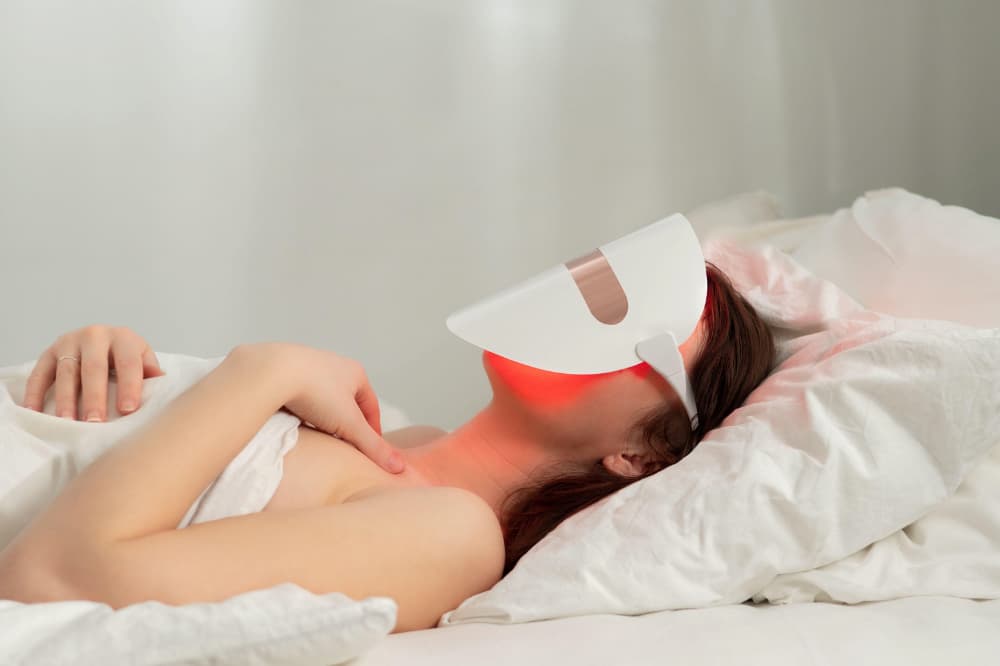
Facial RLT devices, such as wands, panels, or LED masks, operate at lower intensities than full-body systems, and the depth of penetration from a facial device is generally limited to the skin’s surface and underlying layers.
On that basis, some people reason that facial use carries a lower risk. There are, however, a few important considerations:
Eye safety
The eyes are particularly sensitive to light exposure, and near-infrared wavelengths are invisible to the naked eye, meaning you would not naturally blink or look away.
Most devices come with protective goggles for this reason, but this remains a meaningful risk factor during pregnancy.
Heat generation
Some LED devices produce a degree of localised warmth during use.
General pregnancy guidance already advises avoiding heat exposure (saunas, hot tubs, and prolonged hot baths) due to the risk of raising core body temperature.
A facial device generates far less heat than any of those; the principle of caution around thermal exposure during pregnancy still applies, and even mild, localised warmth is worth factoring in.
Device guidance
Most reputable facial RLT brands list pregnancy as a contraindication in their product guidelines. If the manufacturer advises against use during pregnancy, that guidance should be taken seriously.
Red Light Therapy Masks During Pregnancy
The guidance here follows the same principles as facial RLT more broadly. And, if anything, masks present a few additional considerations:
- Full-face coverage means a greater surface area of light exposure concentrated around the head, including close proximity to the eyes, sinuses, and neck.
- Prolonged contact with the face can increase localised warmth.
Most mask brands explicitly advise against use during pregnancy. If you check the safety information for your specific device, you are likely to find pregnancy listed as a contraindication.
If you are currently mid-course with a face mask treatment plan, the sensible approach is to pause until after pregnancy and, ideally, until you have finished breastfeeding.
The good news is that red light therapy is not a time-sensitive treatment in most cases, and picking up where you left off postpartum will still deliver the benefits you are looking for.
Red Light Therapy during Pregnancy: Trimester-by-Trimester
While the overall guidance remains cautious throughout pregnancy, it is helpful to understand why caution varies across the different stages.
First Trimester
The first trimester is the period of greatest developmental sensitivity. This is when the major organ systems form, cell division is most rapid, and the embryo is at its most vulnerable to any external disruption.
Weeks one to twelve are considered the highest-risk window for any complementary therapy, and red light therapy is no exception.
Many women do not yet know they are pregnant during the early weeks, creating another reason to pause RLT if there is any possibility of pregnancy.
Second Trimester
By the second trimester, some healthcare practitioners take a more flexible approach during this window.
However, there remains no clinical consensus on the safety of RLT at any stage of pregnancy.
Your individual circumstances, including your health, the device type, the duration of exposure, and the wavelengths involved, all play a role.
Third Trimester
The third trimester brings its own set of physical changes.
Full-body red light therapy generates warmth through cellular stimulation, and elevated body temperature is something to be managed carefully in late pregnancy.
Postpartum
Red light therapy is generally considered safe to resume after pregnancy, once you are no longer breastfeeding or have confirmed with your healthcare provider that it is appropriate.
Pregnancy-Safe Alternatives to Red Light Therapy
If red light therapy has been part of your routine for skin health, recovery, or general well-being, there are plenty of evidence-backed alternatives that are considered safe during pregnancy.
For skin health
Hormonal skin changes during pregnancy can be frustrating, but these pregnancy-safe ingredients may help.
- Azelaic acid is a good alternative for managing acne and pigmentation.
- Vitamin C can support brightness and collagen.
- Niacinamide is well-tolerated and helpful for redness and uneven texture.
- SPF can help manage melasma.
Always check any skincare product with your midwife or dermatologist before use.
For muscle recovery and pain relief
If you have been using red light therapy to manage pain or support muscle recovery, prenatal massage may be a suitable alternative.
Our deep tissue massage and sports massage can address back and pelvic pain.
For Swelling and Fluid Retention
Swelling in the legs, ankles, and feet is common, particularly in the second and third trimesters. Lymphatic drainage massage is a gentle technique that encourages fluid movement and can help ease this discomfort.
For mood and energy
If you have been using RLT to improve your mood and energy, you may want to consider alternatives to make sure you are still looking after your mental health during this time.
Vitamin D levels, sleep quality, and gentle movement all play a significant role in how you feel day to day.
Should You Use Red Light Therapy While Pregnant?
So, can you use red light therapy while pregnant? The evidence-based answer is that most healthcare professionals currently advise against it, not because RLT has been proven harmful during pregnancy, but because there is insufficient research to confirm that it is safe.
The same applies whether you are asking about a full-body panel, facial treatments, or an at-home LED mask. The depth of penetration, device strength, and wavelengths involved all vary, but the principle remains the same.
When in doubt during pregnancy, the precautionary approach is the right one.
If you would like to explore what treatments might be appropriate during or after your pregnancy, our team at Concordia Clinic is happy to help. We will always point you in the right direction and work alongside your existing maternity care where needed.
Get in touch with the team at Concordia Clinic to see if you’re suitable for red light therapy treatment.
Frequently Asked Questions
Can you use red light therapy while pregnant?
Most healthcare professionals advise against red light therapy during pregnancy due to a lack of research into its effects on fetal development. We recommend pausing treatment for the duration of your pregnancy and consulting your GP or midwife before resuming.
Can I use red light therapy on my face while pregnant?
Facial red light therapy devices operate at lower intensities than full-body systems, but they still raise concerns during pregnancy, including eye safety and proximity to developing tissue. Most device brands list pregnancy as a contraindication. We advise pausing facial RLT during pregnancy.
When can I start red light therapy again after pregnancy?
Many women resume red light therapy after delivery, once they are no longer breastfeeding and have received clearance from their healthcare provider. Postpartum is often an excellent time to benefit from RLT’s anti-inflammatory and skin-supporting properties.
Are there any red light therapy treatments safe for pregnant women?
There is currently no specific trimester or device type that has been confirmed safe for use during pregnancy. Any decision about complementary therapy during pregnancy should be made in consultation with your midwife, GP, or obstetrician.
Is Red Light Therapy the Same as UV Light?
Red light therapy and UV light are not the same thing. UV light is used in the sun and tanning beds and is associated with increased skin cancer risk.
Red light therapy works using different wavelengths and does not involve UV radiation.
It is not linked to the same type of cellular damage or increased melanin production. It is also not placed in the same risk category.
Can I do Red Light Therapy whilst breastfeeding?
There is currently limited research specifically on red light therapy (RLT) while breastfeeding. However, RLT is considered non-invasive and low-risk because it does not use UV radiation or medication.
It is still recommended that you avoid direct exposure to the breasts/nipples immediately before feeding, use devices as directed and avoid excessive heat.
Recent Comments