
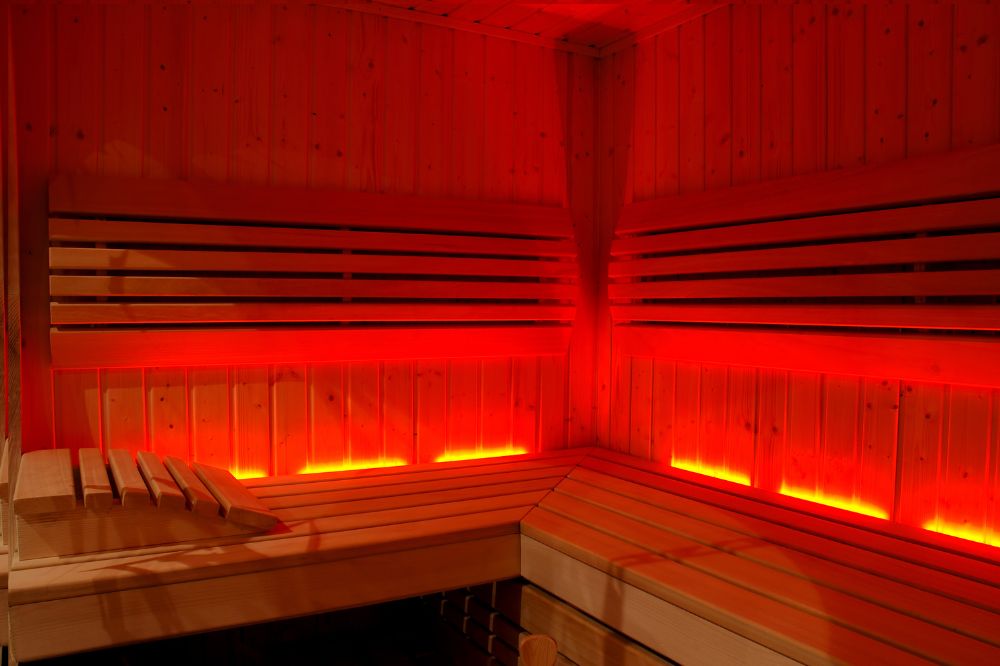
If you’ve been looking into wellness treatments, you’ve probably seen infrared saunas and red light therapy mentioned in the same breath. They sound similar, and both promise a long list of benefits, but they are two very different treatments that work in different ways.
One uses heat, the other uses light, and knowing which does what will help you pick the right option.
In this guide, we’ll break down how each therapy works, what the science says about their benefits, how they stack up side by side, and how to choose the right one for your goals.
What Is Red Light Therapy?
Red light therapy, also known as photobiomodulation (PBM), uses low levels of red and near-infrared light to stimulate activity inside your cells. Unlike a sunbed or heat lamp, it doesn’t warm the body; it works by delivering specific wavelengths of light that are absorbed by the mitochondria, the “energy factories” inside your cells. This boosts ATP production, the fuel your cells use to repair and regenerate.
Because there’s no heat involved, sessions are quick, comfortable, and require no downtime. Red light therapy is most commonly used for:
- Skin rejuvenation and anti-ageing
- Reducing inflammation and joint or muscle pain
- Speeding up wound healing
- Supporting mood and general wellbeing
If you want a deeper look at What Red Light Therapy Does at a cellular level, we’ve covered the science in more detail.
What Is an Infrared Sauna?
An infrared sauna takes a different approach. Instead of heating the air around you like a traditional sauna, it uses infrared wavelengths to heat your body directly. This means you can achieve a deep, effective sweat at lower, more comfortable air temperatures than a conventional steam or wood-burning sauna.
As your core body temperature rises, your heart rate increases, blood vessels dilate, and your body responds much like it would during moderate exercise. This is what drives the therapy’s benefits:
- Detoxification through intense sweating
- Improved circulation and cardiovascular support
- Muscle recovery and reduced stiffness
- Deep relaxation and better sleep quality
Infrared Sauna vs Red Light Therapy
At a glance, the two therapies couldn’t be more different in how they work, even though they’re often grouped under the “infrared wellness” umbrella.
| Red Light Therapy | Infrared Sauna | |
| Wavelength | Red and near-infrared (approx. 620–850nm) | Far-infrared (longer wavelengths) |
| Mechanism | Stimulates cellular energy production (no heat) | Raises core body temperature |
| Penetration depth | Absorbed at the skin’s surface and just beneath | Penetrates deeper into muscle and tissue |
| Session length | 10–20 minutes | 20–45 minutes |
| Sensation | No heat, no sweating | Warm, induces sweating |
| Aftercare | None required | Shower recommended after |
| Primary focus | Targeted, localised treatment | Whole-body, systemic effect |
Benefits of Red Light Therapy
Red light therapy has built a strong reputation across skin health, pain management, and recovery. Some of the benefits include:
Skin health: According to research, red light therapy improves collagen and elastin production, helping to reduce fine lines, improve tone, and support a more even complexion
Pain and inflammation relief: Research also shows that it supports recovery from conditions like arthritis, tendonitis, and muscle strain by reducing inflammation
Wound healing: Red light therapy increases blood flow to the treated area, helping tissue repair itself faster.
Mood and wellbeing: Some research points to a role in supporting serotonin regulation, which may help with overall mood
For a fuller breakdown, see our guide to Red Light Therapy Benefits and Uses.
Benefits of Infrared Saunas
Infrared saunas earn their place in a wellness routine through a different set of benefits, largely tied to the effects of heat stress on the body:
Detoxification: Deep sweating helps flush out toxins through the skin
Cardiovascular support: Regular use can mimic some of the circulatory benefits of moderate exercise
Muscle recovery: Heat helps relax tight muscles and can reduce post-exercise stiffness
Relaxation and sleep: Many users find sauna sessions genuinely calming, which can support better sleep quality
Which One Is Better for Your Goals?
It comes down to what you’re trying to achieve. Let’s explore each one in more detail.
Skin Health and Anti-Ageing
Red light therapy is the clear choice. Its direct effect on collagen production and cell repair makes it far more targeted for skin concerns than an infrared sauna, which doesn’t influence skin cells in the same way.
Pain Relief and Muscle Recovery
Both have a role here. Red light therapy is better suited to a specific joint or injury, while an infrared sauna is more effective for general, full-body post-workout recovery.
Detox and Cardiovascular Support
Infrared sauna wins this; there’s no equivalent detox or cardiovascular mechanism in red light therapy.
Relaxation and Sleep
Infrared sauna has the edge, largely because of the immersive, full-body nature of the experience compared to a shorter, targeted red light session.
How to Choose Between Infrared Sauna and Red Light Therapy
If you’re still not sure which to go for, run through these questions:
What’s your main goal? Skin and targeted pain relief point to red light therapy; detox, cardiovascular support, and relaxation point to infrared sauna.
How much time do you have? Red light sessions are shorter and require no aftercare; sauna sessions take longer and need a shower afterwards.
What’s your setup? Red light devices are compact and easy to fit into a home routine; infrared saunas need more space and, in many cases, a professional setup.
Do you want both? You don’t have to choose; many people benefit from using both therapies, just not at the same time.
Not sure which is right for you? Our team can talk you through your options and help you book a red light therapy session in Liverpool tailored to your goals.
FAQs
Are infrared saunas the same as red light therapy?
No. While both are sometimes grouped under the “infrared wellness” umbrella, they use different parts of the light spectrum and work through entirely different mechanisms: heat versus cellular stimulation.
Is red light therapy or infrared sauna better for skin?
Red light therapy is the better option for skin health, thanks to its direct effect on collagen and elastin production.
Can You Use Red Light Therapy and an Infrared Sauna Together?
Yes, many people use both, and they can work well as complementary therapies. That said, because they work through opposite mechanisms, it’s worth thinking about how you sequence them rather than combining them into a single session.
How often should you use red light therapy or an infrared sauna?
Red light therapy is used 3–5 times a week in short sessions, while infrared sauna sessions are usually recommended 2–3 times a week.
Which is better for weight loss?
Neither is a weight-loss treatment on its own. An infrared sauna can cause temporary water loss through sweating, and red light therapy may support cellular metabolism, but neither replaces a balanced diet and regular exercise
Recent Comments